
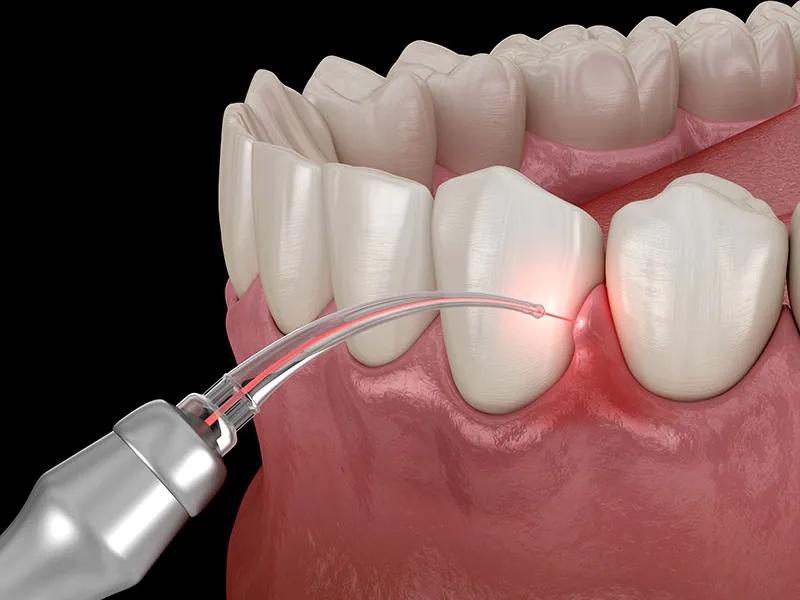
Gum disease is one of the most common oral health conditions, but advanced periodontal treatment doesn't always have to involve traditional surgery. Laser gum therapy offers a modern approach to treating periodontal disease by using focused laser energy to target diseased tissue and bacteria while helping preserve healthy areas of the mouth.
One type of laser gum treatment you may hear about is LANAP®. Understanding how laser therapy works can help you feel more comfortable exploring your treatment options if you've been diagnosed with gum disease.
What Is Laser Gum Therapy?
Laser gum therapy uses specialized dental laser technology to treat the tissues affected by periodontal disease. Instead of relying solely on traditional instruments to clean below the gumline, a dental laser can target infected tissue and bacteria in periodontal pockets.
The goal of treatment is to remove diseased tissue and harmful bacteria while supporting the body's natural healing process. Laser therapy may be used as part of a comprehensive periodontal treatment plan, depending on the severity of your gum disease and your individual needs.
What Is LANAP?
LANAP stands for Laser-Assisted New Attachment Procedure. It is a specific laser-assisted treatment designed to address periodontal disease.
During LANAP, a specialized dental laser is used to target diseased gum tissue and bacteria beneath the gumline. The procedure is designed to remove the affected tissue while preserving healthy tissue. The tooth roots can then be thoroughly cleaned, and the gum tissue is repositioned to support healing.
LANAP is intended to treat the underlying infection associated with periodontal disease rather than simply addressing its symptoms.
How Does Laser Gum Therapy Work?
While the exact treatment process varies depending on your condition, laser periodontal therapy generally involves several steps.
- Evaluating Your Gum Health. Before treatment, your periodontist will examine your gums and assess the severity of your periodontal disease. Measurements of the spaces between your teeth and gums, along with dental X-rays or other diagnostic tools, may be used to understand how gum disease has affected your supporting tissues.
- Targeting Diseased Tissue. During laser treatment, the laser is carefully directed into the periodontal pockets. The laser energy can target diseased tissue and bacteria while helping preserve healthy tissue.
- Cleaning the Tooth Roots. After the diseased tissue has been addressed, your dental team will clean the tooth roots to remove plaque, tartar, and other buildup. This creates a cleaner environment for the gums to heal.
- Supporting Natural Healing. The remaining healthy gum tissue can then heal around the teeth. The goal is to reduce periodontal pockets and create conditions that support healthier gums and the tissues surrounding your teeth.
Your periodontist will provide specific instructions for caring for your mouth after treatment and may schedule follow-up visits to monitor your healing.
What Are the Benefits of Laser Gum Therapy?
Laser technology can offer several potential benefits for appropriate candidates. Depending on your individual situation, these may include:
- Targeted treatment of diseased gum tissue
- Preservation of healthy surrounding tissue
- Treatment of bacteria below the gumline
- Less invasive treatment compared with some traditional surgical approaches
- Potentially less bleeding and swelling
- Support for the body's natural healing process
- Treatment designed to reduce periodontal pocket depth
The specific benefits and results of treatment vary from patient to patient. Your periodontist can explain whether laser gum therapy is appropriate for your condition.
Is Laser Gum Therapy Right for Everyone?
Laser gum therapy isn't necessarily the right treatment for every patient or every stage of gum disease. The appropriate approach depends on factors such as the severity of your periodontal disease, the condition of your gums and supporting bone, and your overall oral health.
A periodontal evaluation is the best way to determine whether LANAP or another treatment option is appropriate for you. It's also important to remember that treating gum disease isn't a one-time process. Maintaining healthy gums requires ongoing oral hygiene and regular periodontal maintenance after treatment.
Don't Ignore the Signs of Gum Disease
Gum disease can progress without causing significant pain, which makes regular dental and periodontal examinations especially important. Signs such as bleeding gums, persistent bad breath, gum recession, swollen or tender gums, or loose teeth should be evaluated by a dental professional.
Early treatment can help protect the tissues and bone that support your teeth and may reduce the risk of tooth loss. At Kusek Family & Implant Dentistry, we combine advanced technology with personalized periodontal care to help patients achieve healthier gums. If you've been diagnosed with gum disease or are experiencing symptoms, our team can evaluate your oral health and discuss whether laser gum therapy or another treatment option may be right for you.
Contact Kusek Family & Implant Dentistry today to schedule a periodontal evaluation and learn more about your treatment options.

Leave a Reply